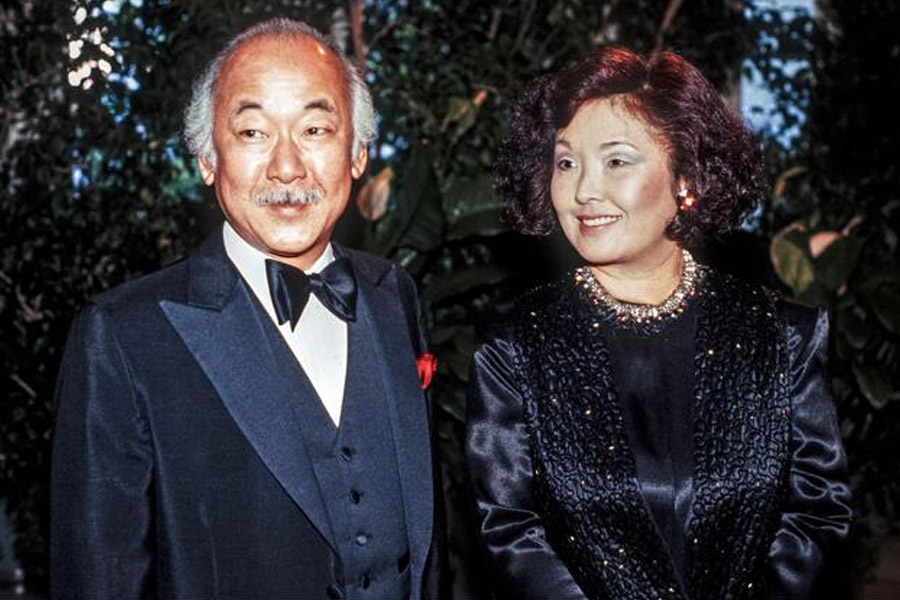
A Private Figure Near Hollywood
Yukiye Kitahara occupies a rare position in entertainment history. She is known chiefly through proximity, not performance. Her name often surfaces beside Pat Morita, the actor and comedian who became Mr. Miyagi. Yet her own public footprint remained slender and deliberate. That restraint shaped the arc of her adult life. She never courted celebrity theatrics. Instead, she favored domestic continuity and personal seclusion.
Her story matters because invisibility can still be historically revealing. Many lives support fame without becoming famous themselves. Kitahara represents that quieter labor with unusual clarity. Her choices reflect steadiness, discretion, and familial loyalty. Those qualities framed her years beside Morita. They also defined her life after divorce. In an era obsessed with exposure, her reticence feels almost ceremonial.
Early Life and Cultural Roots
Very little is publicly documented about Kitahara’s childhood. That absence is itself meaningful. It suggests a family culture that prized privacy. It also reflects her own long refusal of publicity. Based on her marriage date, her birth likely fell in the 1940s or early 1950s. Her heritage is described as Japanese American. That background likely informed her cultural vocabulary and social outlook.
She grew up far from the glare that later touched her name. No childhood interviews survive in public circulation. No memoir details her early schooling or ambitions. This scarcity leaves historians with careful estimates instead of firm narratives. Even so, her later life hints at measured composure. She seemed to prefer substance over spectacle. That preference would remain visible across decades.
Marriage Years and Domestic Pressures
Kitahara met Noriyuki “Pat” Morita in the late 1960s. Mutual friends introduced them. Their courtship unfolded before Morita reached broad national fame. They married on December 28, 1970. Their reception took place at the Playboy Club in Los Angeles. The setting carried glamour, but their home life soon demanded practicality. Glamour rarely pays rent.
The early marriage years were financially thin. Morita was still building a dependable career. He moved between day jobs and stand up work. Kitahara helped hold the household together during those uncertain seasons. Their family also faced periods of housing insecurity. Friends occasionally stepped in with material assistance. One oft repeated story credits Redd Foxx with helping them secure their first home. Such help mattered because modest crises can feel immense.
Morita’s career gathered momentum through the 1970s. He appeared on The Ed Sullivan Show and in recurring television roles. Sanford and Son and Happy Days widened his visibility. Kitahara experienced those shifts from the domestic center. Fame arrived gradually, then suddenly. That transformation can strain even sturdy marriages. Their partnership had to absorb instability, schedules, and public attention. It did so for many years.
The 1984 release of The Karate Kid changed everything. Morita’s portrayal of Mr. Miyagi became iconic. He also earned an Academy Award nomination. By then, Kitahara had already spent years beside his ascent. She remained outside the promotional machine. Her role was not ceremonial. It was infrastructural. She sustained ordinary life while extraordinary recognition arrived.
Family Ties and Children
Kitahara and Morita had two daughters. Their names are Aly and Tia. Aly was born around 1971. Tia was born in the mid 1970s. Both daughters grew up near Hollywood currents without embracing constant visibility. That outcome fits the family pattern. Privacy appears to have been inherited as a discipline.
Aly Morita later pursued creative work linked to entertainment. Her focus included writing and producing. Tia Morita took a different route. She built a career in Geographic Information Systems. That work connects data with urban planning in Los Angeles. The siblings’ paths show variety rather than repetition. Each chose a life with professional substance.
Morita’s first marriage also brought a stepdaughter into Kitahara’s orbit. Erin Morita, born in 1954, remained largely private as well. Family references also mention a grandson named Luke. Reports describe him as artistically inclined. These relationships form a compact kinship circle. They are small in number, but durable in significance.
| Family Member | Relationship | Approximate Birth Year | Notes |
|---|---|---|---|
| Pat Morita | Ex husband | 1932 | Actor and comedian, Oscar nominated |
| Aly Morita | Daughter | 1971 | Writer and producer |
| Tia Morita | Daughter | Mid 1970s | GIS specialist in Los Angeles |
| Erin Morita | Stepdaughter | 1954 | From Morita’s first marriage |
| Luke | Grandson | 1980s | Noted in family references |
Public Appearances and Limited Credits
Kitahara did not develop a public career in entertainment. Her visible screen history is brief. The most cited appearance is Tattletales in 1975. That game show paired celebrity couples in a light competitive format. Kitahara appeared there with Morita. The moment offered a rare glimpse of their public rapport. It also stands as her only widely noted television credit.
Beyond that appearance, she stayed outside the studio ecosystem. She did not become a panelist, spokesperson, or recurring television personality. She did not seek interviews about fame. She did not build a branding apparatus around her marriage. That restraint makes her an unusual Hollywood adjacent figure. Her silence is part of her biography. It is not a gap to be repaired.
Financial Realities and After Divorce
The financial picture of Kitahara’s life remains opaque. That opacity seems intentional. During the marriage, the couple endured lean years. Later success did not erase those early strains. Morita’s earnings improved as his career expanded. Yet his wealth remained modest by Hollywood standards. Public reporting often places his estate in the lower millions. It was not a lavish empire.
Kitahara and Morita divorced in 1989. The marriage had lasted nineteen years. Available accounts describe the split as amicable. The children remained central to the family’s sense of continuity. No public record confirms how assets were divided. No clear inheritance trail links her to Morita’s later estate. That uncertainty should invite caution, not speculation. Private people rarely leave neat financial archives.
After the divorce, Kitahara settled into deeper seclusion. She did not convert her past into media capital. She did not chase retrospective visibility. That decision distinguishes her from many former celebrity spouses. Her post marriage life appears intentionally unbroadcast. Such quiet can be its own kind of authorship. She wrote herself out of the spotlight by refusing its grammar.
Later Mentions and Persistent Privacy
From the 1990s onward, public attention toward Kitahara remained intermittent. Her name reappeared mostly in retrospectives about Morita. Those pieces often revisited the family’s early hardships. They also repeated the Redd Foxx assistance story. The focus usually rested on Morita’s rise. Kitahara functioned as a stabilizing presence in the background. That framing is reductive, yet understandable.
She has no verified public social media presence. No confirmed Instagram, X, or Facebook profile circulates under her identity. No public memoir offers her side of the story. No widely known interview expands her perspective. The result is a biography shaped by negative space. Even so, that silence has texture. It signals autonomy rather than absence.
Selected Timeline
| Year | Event |
|---|---|
| Late 1960s | Meets Pat Morita through mutual friends |
| December 28, 1970 | Marries Pat Morita in Los Angeles |
| Around 1971 | Daughter Aly is born |
| 1975 | Appears on Tattletales with Morita |
| Mid 1970s | Daughter Tia is born |
| 1984 | Morita breaks out in The Karate Kid |
| 1989 | Divorces Morita after nineteen years |
| 1994 | Morita later marries Evelyn Guerrero |
| November 24, 2005 | Morita dies at age 73 |
| 2024 to 2025 | Her name resurfaces in retrospective coverage |
Key Takeaways
Kitahara’s life is defined by privacy, family, and discretion. She stood near a major Hollywood ascent without surrendering her own boundaries. Her marriage to Pat Morita placed her inside a public narrative, yet she resisted its pull. Her daughters, stepdaughter, and grandson extend that family line into quieter professional worlds. Her biography remains slim in public records, but its restraint is its strongest feature.


