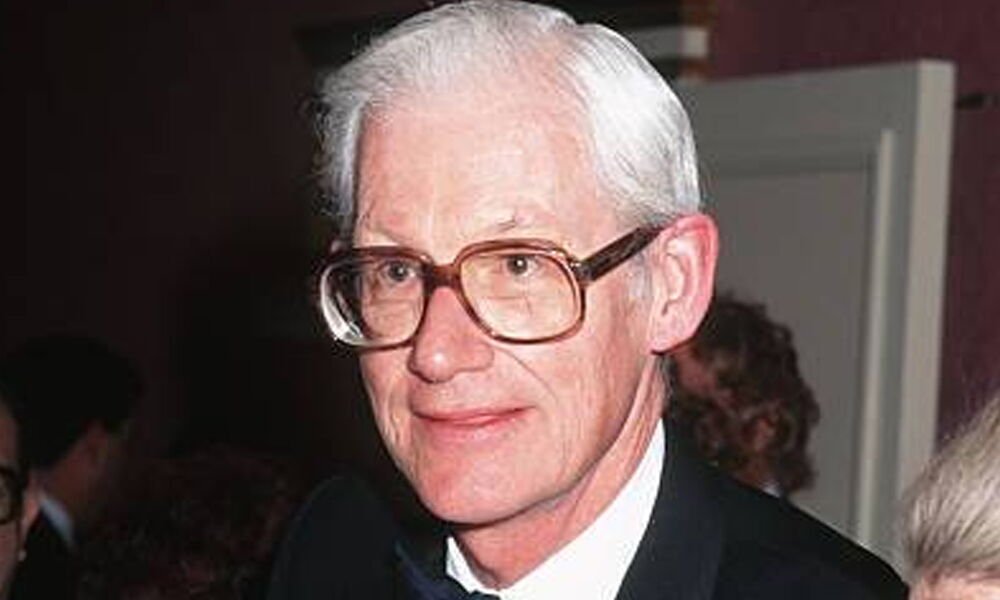
Early Life and Education
Rodman Clark Rockefeller was born in Manhattan on May 2, 1932. He entered a family already associated with immense enterprise and public influence. His early years unfolded within a milieu of privilege, discipline, and expectation.
He attended Deerfield Academy and graduated in 1950. He then studied at Dartmouth College, earning a B.A. in 1954. Later, he completed an MBA at Columbia Business School in 1956.
That sequence of institutions signaled formidable preparation. It also reflected a deliberate path toward executive responsibility. His education blended classical rigor with commercial intelligence.
Marriage and Family Life
In 1953, he married Barbara Ann Olsen. Their marriage produced four children and shaped an important chapter of his private life. Later, in 1980, he married Alexandra von Metzler.
His children were Meile Louise Rockefeller, Peter C. Rockefeller, Stuart Rockefeller, and Michael Rockefeller. Their names became linked to law, philanthropy, activism, and enduring public curiosity. The family remained closely watched because of both prestige and mystery.
Family continuity mattered greatly in the Rockefeller world. It also created pressures that few families ever encounter. Rodman’s domestic life intersected constantly with public scrutiny.
Entering Business at IBEC
Rodman joined International Basic Economy Corporation in 1957. This company became the central stage of his professional development. He worked there during a period of changing global commerce.
In 1968, he became vice president. In 1972, he rose to chief executive officer. He held that top role until 1980.
This progression shows steady advancement rather than sudden ascent. He worked across more than two decades of institutional growth. His leadership helped define IBEC’s practical business identity.
Selected Career Chronology
| Year | Position or Event | Organization |
|---|---|---|
| 1957 | Joined the company | International Basic Economy Corporation |
| 1968 | Vice President | International Basic Economy Corporation |
| 1972 | Chief Executive Officer | International Basic Economy Corporation |
| 1973 to 1980 | Co Chair | Mexico United States Business Committee |
| 1979 | Received honor | Order of the Aztec Eagle |
| 1980 to 1985 | Chairman | Arbor Acres Farm |
Trade Relations and Mexican Recognition
Rodman played a notable role in fostering cross border commercial relations. From 1973 to 1980, he co chaired the Mexico United States Business Committee. That work helped advance dialogue between two major economies.
His efforts contributed to a longer diplomatic and commercial trajectory. Some observers later connected this work to the groundwork for NAFTA. The connection reflects influence that extended beyond corporate balance sheets.
In 1979, Mexico awarded him the Order of the Aztec Eagle. This honor recognized his contributions to bilateral economic development. It placed him among individuals valued for international economic bridge building.
Such recognition was not merely ceremonial. It indicated trust, respect, and sustained engagement. Rodman occupied a zone where commerce met diplomacy.
Arbor Acres Farm and Agricultural Innovation
After leaving IBEC leadership, he chaired Arbor Acres Farm from 1980 to 1985. This role extended his career into agricultural enterprise. It also connected him to poultry genetics and production improvement.
The position required managerial precision. It demanded familiarity with long term investment and technical progress. His tenure coincided with advances that strengthened the farm’s reputation.
Agribusiness often escapes broad public notice. Yet it affects food systems, genetics, and supply networks. Rodman’s work at Arbor Acres displayed his range as an executive.
Board Service and Institutional Stewardship
Rodman also served as trustee and board member for several institutions. His service spanned roughly from 1970 to 2000. The Rockefeller Brothers Fund was among the most prominent.
Board participation requires judgment and discretion. It often influences strategy without attracting headlines. His involvement signaled trust from major philanthropic and corporate circles.
He participated in the stewardship culture associated with the Rockefeller name. That culture emphasized responsibility, continuity, and social utility. His board work complemented his business identity with civic gravity.
The Rockefeller Family and Public Attention
The Rockefeller family’s wealth originated with John D. Rockefeller’s historic fortune. By 1913, his peak net worth reached an extraordinary level. In present dollar terms, that figure is often estimated at $409 billion.
By 2024, family assets were estimated near $10.3 billion. Those holdings were managed through trusts and diversified structures. The family’s wealth therefore shifted from industrial concentration to distributed stewardship.
The dynasty also altered its public posture. Foundations increasingly divested from fossil fuels. They expanded environmental initiatives and sustainable investment commitments.
This evolution reveals a changing moral vocabulary. Earlier eras centered on accumulation and industrial power. Later decades highlighted stewardship, climate awareness, and philanthropic adaptation.
Recent Attention Around the Family
Public interest in Rodman’s household has continued long after his death in 2000. One reason is the persistent fascination with Michael Rockefeller. His disappearance near New Guinea in 1961 remains unresolved.
That mystery continues to inspire speculation and periodic media attention. It also keeps the family within broader cultural memory. Few dynastic stories combine wealth and uncertainty so starkly.
Rodman’s former Mid Century Modern home in Pocantico Hills also drew renewed notice. The house, built in 1972, was listed in 2025 at $12 million. Architecture enthusiasts admired its restrained modernism.
These details show how legacy survives through place, property, and narrative. A family name can attach itself to buildings as readily as to institutions. Rodman’s world remains visible through such material traces.
Personal Legacy and Character
Rodman Clark Rockefeller was not merely an heir. He functioned as a corporate executive with international reach. He also maintained ties to philanthropy and family governance.
His career combined continuity and specialization. He advanced within IBEC, then shifted into agriculture and board service. That pattern suggests disciplined versatility.
He lived through an era when elite American families faced new expectations. Wealth alone became insufficient. Leadership, responsibility, and public usefulness gained greater importance.
Rodman’s trajectory fits that transition. He moved through business, trade, agriculture, and philanthropy with measured intent. His life reflects both inherited stature and individual exertion.
Key Takeaways
Rodman Clark Rockefeller was born on May 2, 1932, and died on May 14, 2000. He studied at Deerfield Academy, Dartmouth College, and Columbia Business School. He married twice and fathered four children.
His professional center was International Basic Economy Corporation. He became vice president in 1968 and CEO in 1972. He also co chaired the Mexico United States Business Committee from 1973 to 1980.
He received the Order of the Aztec Eagle in 1979. Later, he chaired Arbor Acres Farm from 1980 to 1985. His board service stretched across decades.
The Rockefeller family remained influential through business, philanthropy, and environmental commitments. Their wealth changed form, yet their prominence endured. Rodman’s life illustrates that wider transformation with notable clarity.